Best Time to Drive Uber in Sydney (Surge Pricing Guide)
This article contains affiliate links. If you sign up through our links, we may earn a commission at no extra cost to you. This does not influence our recommendations.
A note on earnings figures: The income estimates in this article are based on driver reports, platform data, and publicly available research. Actual earnings vary significantly. Treat these figures as a guide, not a guarantee.
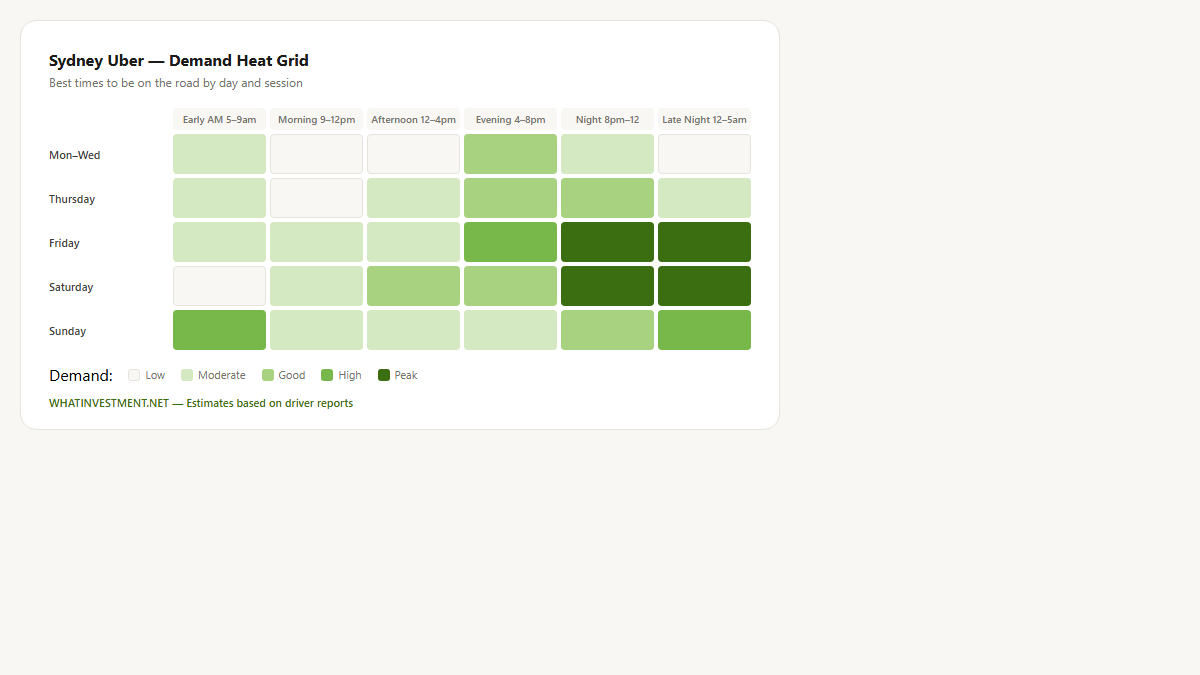
The best time to drive Uber in Sydney is Friday and Saturday nights from 10pm to 3am, when surge multipliers regularly hit 1.5x–3x and experienced drivers report grossing $35–$50+ per hour. Sunday mornings between 2am and 5am—after clubs and venues close—come close, and the Friday afternoon commuter rush from 4pm to 7pm is the most consistent earner for drivers who prefer daylight hours.
Sydney is Uber’s biggest Australian market, and the difference between driving at the right time versus the wrong time can easily be $15–$20 per hour. This guide breaks down exactly when to be on the road, where to position yourself, and which days to avoid.
Best Times to Drive Uber in Sydney
Sydney’s peak Uber periods follow a predictable weekly rhythm, with two main earning windows and a handful of event-specific spikes.

Friday and Saturday nights (10pm–3am) are the top-earning window by a large margin. Entertainment precincts across the inner city are at capacity, ride demand spikes sharply after midnight, and surge pricing kicks in as driver numbers thin out while passenger demand stays high. Most drivers who work these shifts report gross earnings of $35–$50 per hour during the peak.
Friday afternoon commuter rush (4pm–7pm) is the best daytime window. The CBD–North Sydney corridor, Parramatta, and the Eastern Suburbs generate consistent demand without the unpredictability of late-night fares. Surge isn’t as dramatic—typically 1.2x–1.5x—but trip frequency is high and the rides are short, which keeps your acceptance rate healthy.
Sunday mornings (2am–5am) catch the tail of Saturday night. A lot of Sydney drivers log off before 3am, but demand stays elevated for another hour or two. The fares are long—people heading back to the suburbs—which means fewer trips but higher per-trip revenue.
Monday to Thursday evenings (5pm–8pm) provide steady but unspectacular earnings. Airport runs from Sydney Airport (SYD) are the exception—domestic departures create consistent outbound demand and the $15 airport levy adds directly to your fare.
Best Suburbs and Pickup Zones in Sydney
Positioning matters in Sydney more than most Australian cities because of how geographically spread it is.

The CBD and inner east (Kings Cross, Surry Hills, Darlinghurst, Paddington) generate the highest density of ride requests on Friday and Saturday nights. Park anywhere near Oxford Street or Kings Cross and you’ll rarely wait more than three minutes for a ping during peak hours.
Parramatta is underrated. Western Sydney’s population is large and underserved by late-night transport. Surge events here don’t hit the same peaks as the CBD, but the lower competition means you’re rarely sitting idle.
Sydney Airport deserves its own entry. Pick up from the domestic terminal during departure rushes (6–8am and 3–6pm on weekdays) and you’ll collect the airport pickup levy on every fare. The rides are long, which compounds the earnings. Avoid the taxi queue—use the dedicated rideshare pickup lane on the arrivals level.
Bondi and the Eastern Beaches are strong on Sunday mornings after big Saturday nights, and on summer evenings when beach crowds are heading home. The Bondi–CBD route is one of Sydney’s most requested trips.
Chatswood and the North Shore see reliable demand during the weekday evening commute, particularly for the Chatswood–CBD and Lane Cove–CBD corridors.
When Surge Pricing Happens in Sydney
Uber’s surge pricing activates when there are more ride requests in an area than available drivers. In Sydney, surge is most predictable around closing times at major entertainment venues, but events can trigger it at any hour.
New Year’s Eve is Sydney’s biggest single-night surge event nationally—multipliers have hit 4x–5x in previous years around Circular Quay and the Harbour Bridge viewing areas. Drivers who position themselves in Surry Hills or Newtown (rather than competing in the lockout zone) tend to capitalise more effectively.
AFL and NRL matches at ANZ Stadium, Allianz Stadium, and the SCG push demand sharply after final sirens. Check the fixture calendars—a big State of Origin match or a finals game can produce surge conditions for 45–60 minutes post-game.
Mardi Gras in March, the Sydney to Hobart start in late December, and Vivid Sydney in May–June all create localised surge spikes. Vivid is particularly underrated—it runs for four weeks and generates CBD demand every evening.
And the weather matters more than people expect. Sydney thunderstorms in summer—particularly weekday afternoon storms—reliably trigger surge as people abandon public transport and bike-shares.
How Much Sydney Uber Drivers Actually Earn
Sydney’s gross hourly rate is the highest in Australia, but expenses are also higher than most cities—fuel is pricier in Sydney than Perth or Adelaide, and tolls (M2, M5, Lane Cove Tunnel) add up fast if you’re running the motorway corridors.
| Shift Type | Weekly Hours | Gross/Week | Net Estimate |
|---|---|---|---|
| Casual (weekend nights only) | 10–12 hrs | $350–$480 | $220–$320 |
| Part-time | 20–25 hrs | $550–$800 | $340–$530 |
| Full-time | 40–50 hrs | $900–$1,400 | $560–$920 |
Estimates based on driver reports. Actual figures vary by vehicle, area, hours, and Uber’s current service fee (~25–27.5%).
For a deeper breakdown of Sydney-specific expenses and income, see our guide to how much Uber drivers make in Sydney.
Practical Tips for Sydney Drivers
- Start your Friday shift at 9pm, not 11pm. The surge ramps from 9pm–10pm, and being on the road early means you’re already in the right suburb when demand spikes.
- Set toll preferences in the Uber driver app. If you don’t want to run the M5 or M2 corridors, you can limit tolled routes—though this may reduce acceptance rate.
- Use the Uber driver heat map before you park. Sydney’s demand shifts faster than most cities. A red zone on Darlinghurst Road at midnight can go grey by 1am as the crowd moves to Newtown or the Rocks.
- Log off during State of Origin halftime. Demand spikes hard at full time, not halftime. Many drivers log on during halftime and flood the zone—you’re better off waiting until the siren.
- Airport pick-ups: check terminal status before queuing. Flight delays affect wait times significantly. The Uber app shows estimated wait in the driver queue—anything over 20 minutes is usually not worth staying for.
- Track your tolls separately. They’re fully tax-deductible when incurred on a trip, but Uber’s in-app toll reporting isn’t always accurate. Use a logbook app to capture each toll as it happens.
For everything you need on the financial side of driving in Sydney, our guide to Uber driver tax in Australia covers the ATO rules, GST, and what you can claim.
Frequently Asked Questions
What is the best day to drive Uber in Sydney?
Saturday is the single best day. Friday is close behind, but Saturday night produces the highest sustained surge and the longest demand window (often running past 3am). Sunday afternoons can surprise you if there’s a major event on.
Does Uber surge pricing happen during the week in Sydney?
Yes, but it’s less reliable. Weekday surge typically occurs during the morning rush (7–9am) and the Friday evening commute. Storms and events can trigger mid-week surge, but you can’t bank on it the way you can Friday–Saturday nights.
Is Sydney worth driving for Uber full-time?
It depends on your costs. Sydney has the highest gross earnings in Australia, but fuel, tolls, and parking eat into margins more than other cities. Full-time drivers who stick to peak windows and manage expenses carefully can net $800–$1,000/week. Drivers who work all hours regardless of demand typically earn less than that after costs.
Last reviewed: 01/09/2026